
Building Muscle for longevity
A conversation with Dr. Hillary Fredrickson, ND & Dr. Kara Burkhart, ND on the Link Between Muscle Building & Longevity.
At Flourish Integrative Medicine, we often talk about longevity in terms of what we can actively build—not just what we hope to prevent. One of the most powerful (and often overlooked) predictors of healthy aging is skeletal muscle.
For years, conversations around health and aging centered on weight, body fat, or cardiovascular fitness. Today, research is helping us understand something much more important: skeletal muscle isn't just for movement—it's an essential organ of longevity.
Maintaining and building muscle supports everything from balance and mobility to blood sugar regulation, bone health, and metabolic function. Even more encouraging, muscle can be built at virtually any age.
Why Skeletal Muscle Matters More Than Ever
As we age, it's natural to lose muscle mass. However, this loss doesn't just affect strength—it can impact nearly every aspect of long-term health.
Healthy skeletal muscle helps:
Support healthy blood sugar and insulin regulation
Improve balance and stability
Protect bone health
Support metabolic function
Preserve independence and mobility as we age
Rather than focusing solely on weight or BMI, we're increasingly helping patients pay attention to their muscle mass. One of the tools we use in our practice is body composition analysis, which allows us to measure skeletal muscle and monitor changes over time. Watching muscle increase can be a far more meaningful health marker than simply watching the number on the scale.
Women and Muscle: A Conversation That's Long Overdue

For decades, strength training was largely viewed as something for athletes—or men.
Many women grew up hearing that exercise meant cardio, while lifting weights was discouraged or overlooked. Today, that conversation is changing.
Building muscle isn't about becoming bulky. It's about creating resilience.
Whether you're in your 30s, navigating perimenopause, postmenopausal, or well into your 70s, maintaining muscle becomes one of the most important ways to support healthy aging. In our experience, women can absolutely continue building muscle later in life. We've seen meaningful improvements in patients well into their seventies through consistent strength-building habits.
Hormones May Be the Missing Piece
Sometimes patients tell us:
"I'm working out consistently, but nothing seems to be changing."
When that happens, it's worth looking beyond the workout itself.
One factor that deserves attention is testosterone.
Although testosterone is often thought of as a male hormone, women produce it as well, and it plays an important role in:
Building and maintaining muscle
Supporting energy and vitality
Brain function
Libido
Healthy aging
During perimenopause and menopause, testosterone levels often begin to decline—sometimes before estrogen or progesterone changes become obvious. While conventional hormone replacement therapy commonly focuses on estrogen and progesterone, testosterone is often overlooked.
A simple blood test can help determine whether hormone levels may be contributing to difficulty building muscle or symptoms like fatigue, decreased strength, or low libido. Not every woman needs testosterone therapy, but it's an important conversation to have if progress has stalled.
Protein: Are You Getting Enough?

Exercise alone isn't enough.
Your muscles need the raw materials to rebuild, and for many adults, that means eating more protein than they're accustomed to.
A practical goal discussed in our conversation is aiming for roughly 25–40 grams of protein per meal, though individual needs vary.
If increasing protein feels overwhelming, start gradually. Consistency is more important than perfection.
Protein powders can also be a helpful tool, especially when meeting protein goals through food alone is difficult. If you choose to use one, look for companies that perform rigorous third-party testing for contaminants such as heavy metals and other impurities. Quality matters.
Nutrients That Support Healthy Muscle
Building muscle requires more than protein. Your body also needs adequate vitamins and minerals to create and repair tissue.
Some of the nutrients discussed include:
Vitamin B12
Iron
Ferritin
Vitamin C
Deficiencies in these nutrients may make it more difficult for the body to build and maintain healthy muscle tissue. This is one reason we often evaluate nutritional status alongside hormone health when creating personalized wellness plans.
You Don't Need Hours at the Gym
One of the biggest misconceptions about strength training is that it requires long workouts or expensive gym memberships.
It doesn't.
Simple, consistent resistance training performed throughout the week can be incredibly effective.
Some of the movements discussed include:
Squats (one of the most effective full-body strength exercises)
Bridge pose (excellent for strengthening the glutes and counteracting prolonged sitting)
Walking uphill
Push-ups or modified push-ups
Yoga movements like Downward Dog to Chaturanga
Bodyweight exercises
Light dumbbell work
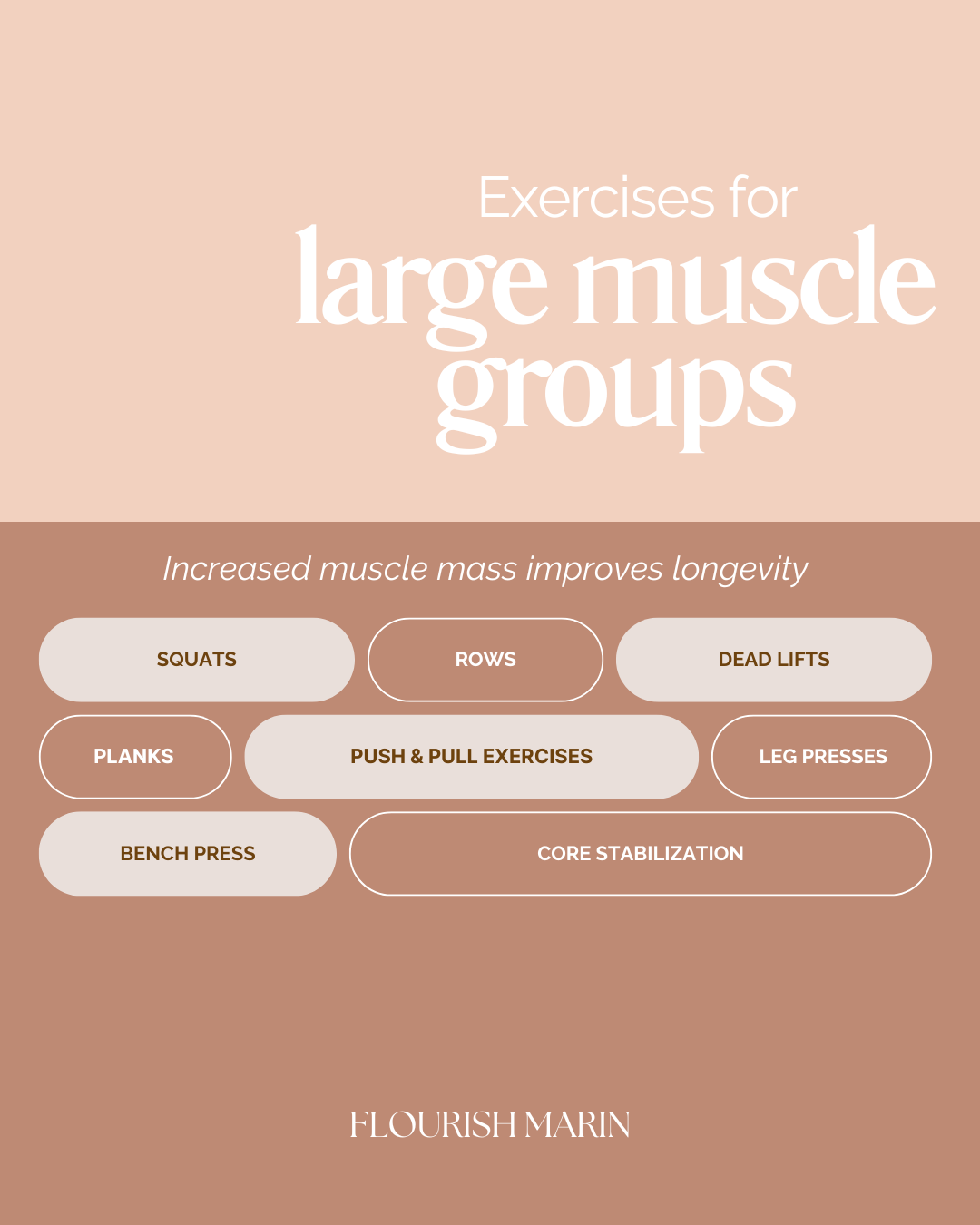
Rather than thinking of exercise as something that only "counts" during a structured class, consider weaving strength into everyday life.
Do a few sets of squats before dinner.
Practice bridge pose while watching television.
Keep a dumbbell nearby and perform a few strength exercises during work breaks.
Small amounts of resistance training performed consistently can add up to meaningful improvements over time.
Progress Over Perfection
One of our favorite reminders from this conversation is to avoid the "all-or-nothing" mindset.
You don't have to follow the perfect workout program.
You don't have to hit every protein goal every day.
Instead, focus on building sustainable habits that fit naturally into your life.
Strength grows through consistency—not intensity.
Building Muscle Is an Investment in Your Future

Healthy aging isn't simply about preventing disease.
It's about preserving vitality, mobility, confidence, and independence for decades to come.
Building skeletal muscle is one of the most impactful ways to support those goals, whether you're just beginning your wellness journey or looking to optimize your health during midlife and beyond.
At Flourish Integrative Medicine, we help patients understand the whole picture—from hormone health and nutrition to body composition and personalized wellness strategies—so they can make informed choices that support lifelong vitality.
If you're curious about your muscle health, wondering whether hormones or nutrient deficiencies may be limiting your progress, or simply want guidance on aging well, we'd love to help.
Schedule a consultation with Flourish Integrative Medicine to create a personalized plan that supports strength, longevity, and vibrant health.